


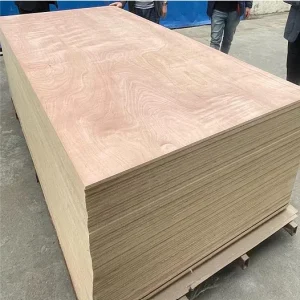
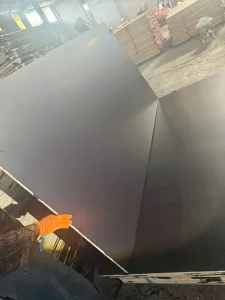
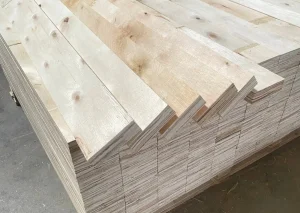
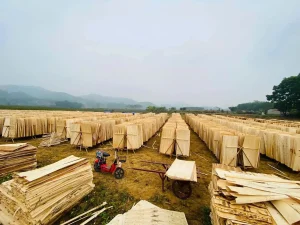
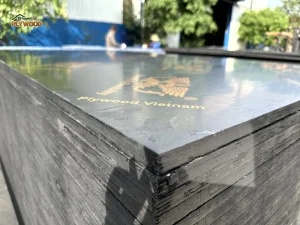
When contractors analyze formwork plywood costs, they often fixate on the price per sheet. However, the most critical metric for long-term project budgeting is the cost per pour. While eucalyptus core formwork plywood commands a higher unit price, its ability to endure 15–20 reuse cycles—significantly outperforming the 8–12 cycles typical of acacia cores—shifts the economic reality in favor of higher-density panels. This article breaks down the engineering behind this performance gap and how to specify the optimal panel for your job site.
The Mechanics of Formwork Performance
Film-faced plywood typically reaches the end of its service life in one of two ways: the film delaminates from the substrate, or the core material undergoes mechanical crushing under repeated concrete pressure. Both failure modes are directly linked to core density.
Higher-density cores provide superior dimensional stability, which protects the bond between the substrate and the protective film. Vietnamese manufacturers generally utilize two core species:
-
Eucalyptus (650–750 kg/m³): The high-density standard for premium formwork.
-
Acacia (~580 kg/m³): A mid-range density option suitable for standard applications.
-
Note: Styrax (480–500 kg/m³) is excluded from formwork specifications due to its lower stiffness, which leads to surface deflection and premature structural failure.
Disclaimer: Reuse cycle estimates are dependent on the synergy between three variables: core density, film weight (gsm), and adhesive chemistry. Using a high-density eucalyptus core paired with inferior MR glue or lightweight film will not achieve 15–20 cycles. The figures below assume AICA 135 gsm film and phenolic (WBP) glue—the premium specification standard at Plywood ThanhdoLLC.
Reuse Performance by Core and Factory Grade
Source: Internal production data, Plywood ThanhdoLLC, 2026.
These ranges assume standard site conditions (proper use of release agents, mechanical stripping, and cleaning between pours). Demanding site conditions—such as high-vibration consolidation or thermal stress—will naturally trend toward the lower end of these ranges.
Why Density Dictates Service Life
-
Resistance to Surface Crushing: Each pour subjects the panel to concrete pressure, vibration during consolidation, and mechanical stripping forces. A 650–750 kg/m³ eucalyptus core resists the compression that causes micro-fractures in the film bond. Conversely, lower-density acacia cores compress more easily, which propagates film delamination over time.
-
Thermal Stability: Concrete curing is exothermic. The repetitive heating and cooling cycles create significant stress at the film-to-substrate interface. Denser eucalyptus fibers exhibit less dimensional movement, preserving the integrity of the adhesive bond.
-
Edge Integrity: Water ingress is the primary cause of internal delamination. Dense eucalyptus cores maintain edge-sealing integrity longer than budget-grade acacia cores, preventing moisture from compromising the inner plies. Plywood ThanhdoLLC utilizes full-stitched core construction to eliminate internal gaps, ensuring that no voids exist to trap moisture or create weak zones.
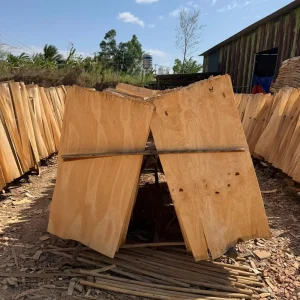
Procurement Checklist: Specifying High-Reuse Panels
Do not settle for generic descriptions from suppliers. To ensure 15–20 cycle performance, confirm the following four parameters:
-
1. Core Species: Specify “Eucalyptus” explicitly. Do not accept “hardwood core,” as this is often shorthand for acacia.
-
2. Film Quality: Require AICA 135 gsm minimum. Substitutes often underperform in surface hardness and abrasion resistance. Request the manufacturer’s technical data sheet for the film.
-
3. Adhesive: Demand Phenolic (WBP) glue. Standard MR glue is moisture-resistant but not waterproof; it will eventually fail under the alkaline conditions of concrete and repeated water cleaning.
-
4. Construction Method: Request full-stitched core construction. This prevents internal voids and inconsistent thickness, which are common failure points in loose-laid panels.
Economic Analysis: Eucalyptus vs. Acacia
While eucalyptus panels may carry a 15% premium per sheet, the per-pour cost is often 30% lower due to the extended service life. Furthermore, fewer panel replacements result in significant savings on site logistics, labor for stripping and replacement, and overall material waste.
-
Select Eucalyptus Core for: High-rise structures, industrial-scale pouring, or rental formwork operations where total lifecycle revenue is the priority.
-
Select Acacia Core for: Projects requiring fewer than 10 pours where panel replacement is inexpensive and logistical simplicity is preferred.
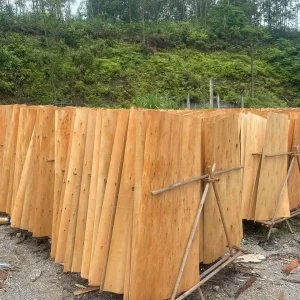
Logistics and Loading
Eucalyptus core formwork is denser, which impacts container payload efficiency. A 40HC container of 18mm eucalyptus panels typically accommodates 15 pallets, whereas lighter acacia cores can fit 16. Plywood ThanhdoLLC’s logistics team performs exact weight calculations for every mixed-load order to ensure containers stay within the 28.5 MT weight limit while maximizing volume.
Premium Formwork Specification (Plywood ThanhdoLLC)
-
Core: Plantation-grown Eucalyptus.
-
Glue: Phenolic (WBP).
-
Film: AICA (Japan) 135 gsm.
-
Construction: Full-stitched, gap-free.
-
Certifications: FSC, CARB P2, CE, ISO 9001, EUDR.
By aligning core density with the correct film and adhesive, contractors can drastically lower their long-term formwork expenditures. For a tailored quotation or to request samples of our eucalyptus-core panels, please contact the Plywood ThanhdoLLC export team.
Disclosure: This article is published by Plywood ThanhdoLLC, a Vietnam-based plywood manufacturer. While we aim to provide objective industry guidance, readers should evaluate all recommendations within the context of their specific project needs.