


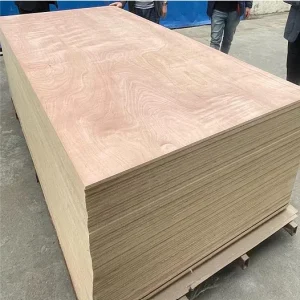
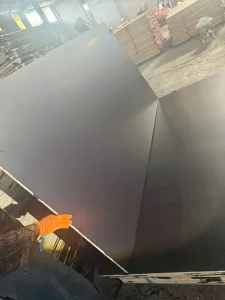

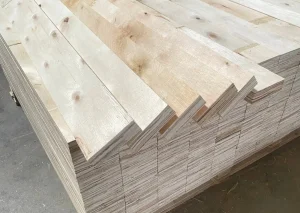

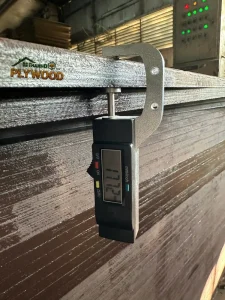
Determining the weight of plywood per sheet is a task often clouded by oversimplification. Buyers frequently ask for the weight of a standard “18mm sheet” without accounting for the most critical factor: core species. Because the species determines the density, it is the primary driver of weight. A sheet of 18mm plywood with a eucalyptus core weighs significantly more than the same thickness in a styrax core. This difference—often over 11 kg per sheet—scales up to hundreds of kilograms per pallet, directly impacting freight costs, container payloads, and on-site handling logistics.
This guide provides the necessary formulas, verified density metrics for Vietnamese timber species, and pre-calculated weight tables to ensure your logistics planning is accurate.
The Weight Calculation Formula
Plywood weight is a function of volume and material density. At standard export moisture content (6–8%), the formula is straightforward:
Weight (kg) = Thickness (m) × Length (m) × Width (m) × Density (kg/m³)
-
Step 1: Calculate Volume (m³) = (Thickness mm ÷ 1000) × (Length mm ÷ 1000) × (Width mm ÷ 1000)
-
Step 2: Calculate Weight (kg) = Volume (m³) × Density (kg/m³)
Standard export plywood typically maintains a density range between 340–700 kg/m³. Note that face veneers (such as birch, okoume, or film coatings) contribute less than 2% of the panel’s total weight and are accounted for in the core density values provided below.
Core Species Density Benchmarks
Plywood ThanhdoLLC utilizes three primary Vietnamese core species. These density values represent the full assembled panel, incorporating the core, glue lines, and face veneers.
Weight Tables (1220 × 2440mm Standard Size)
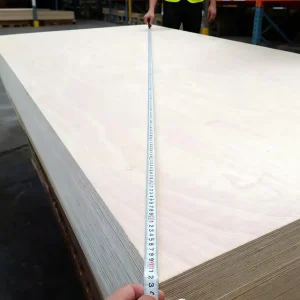
Calculated for 4×8 ft sheets (Gross area: 2.9768 m²).
Note: These figures reflect finished goods at 6–8% moisture content. Freshly pressed panels may be 10–15% heavier.
Shipping Context and Container Payload
Individual sheet weight is a critical factor for warehouse and freight planning:
-
Pallet Configuration: Pallet stacks are limited to 1000mm in height for forklift safety.
-
Payload Management: The 40HC container limit is 28.5 metric tons. Eucalyptus-core containers often reach this weight limit long before they reach the volumetric capacity, meaning fewer pallets can be loaded compared to styrax cores.
Weight Comparison: 18mm Pallet (55 sheets per pallet)
-
Styrax Core: ~1,447 kg per pallet.
-
Acacia Core: ~1,622 kg per pallet.
-
Eucalyptus Core: ~2,060 kg per pallet.

Core Species Trade-Offs
1. Styrax (480–500 kg/m³) — The Lightweight Premium
Styrax is the go-to substitute for European birch-core plywood. Its lower cell density makes it ideal for kitchen cabinets and interior furniture where freight weight reduction is a priority for international importers.
2. Acacia (~580 kg/m³) — The Commercial Workhorse
As the most widely available plantation species in Northern Vietnam, acacia offers a balanced density. It is the preferred choice for commercial and packing-grade plywood where cost-efficiency is balanced against structural necessity.
3. Eucalyptus (650–750 kg/m³) — Heavy-Duty Structural
Eucalyptus offers the highest Modulus of Rupture (MOR) and screw-holding strength. It is the standard for flooring substrates and heavy shelving. Because of its density (640–760 kg/m³), it requires careful container loading to remain within payload limits.
Summary for Importers
When evaluating quotations from Vietnamese suppliers:
-
Specify the Core: Distinguish between “acacia core,” “styrax core,” and “eucalyptus core.”
-
Verify Shipping Weights: Use the calculated pallet weights above to ensure your container loading plans comply with the 28.5 MT weight limit.
-
Understand Density Impacts: The shift from styrax to eucalyptus can increase weight by up to 42% at the same thickness.
For accurate weight data specific to your custom order requirements, please contact Plywood ThanhdoLLC. Our export team provides full packing lists and verified weight reports for every shipment.