


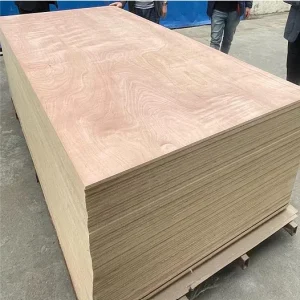


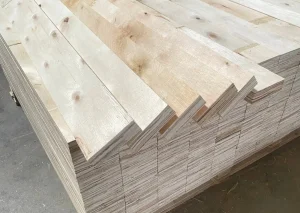
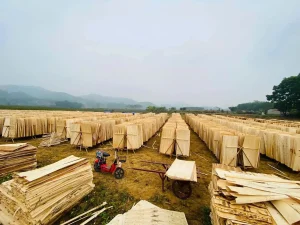
Vietnam has cemented its reputation as a global powerhouse in the plywood industry, with total exports reaching $1.4 billion. For international buyers and stakeholders, understanding the dynamics of this market is essential for securing a stable and high-quality supply chain. Here is a professional breakdown of the current landscape.
1. The U.S. Market: Quality and Commitment
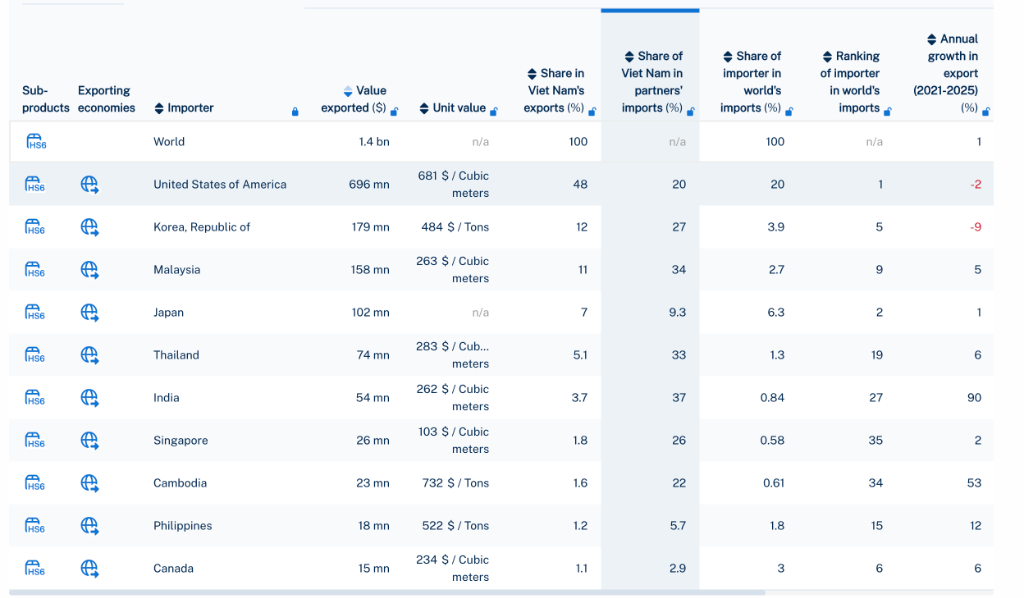
The United States remains the cornerstone of Vietnam’s plywood exports, accounting for 48% of total value ($696 million).
- Expert Insight: The high unit value of $681/Cubic meter confirms that Vietnamese manufacturers are successfully meeting the stringent technical requirements of the U.S. market. Despite a slight cooling in growth (-2%), the U.S. remains the primary benchmark for the quality and compliance standards that Vietnamese factories consistently strive to exceed.
2. Emerging High-Growth Markets: The New Frontier
While traditional markets remain vital, the data reveals a significant shift toward emerging economies where demand for high-quality construction materials is surging:
- India: Leading the charge with an impressive 90% annual growth rate. With Vietnam already capturing 37% of India’s import market share, it is clear that Indian buyers recognize the superior value proposition of Vietnamese plywood.
- Cambodia: Showing a robust 53% growth, this market reflects the increasing regional integration and the reliability of Vietnamese logistics and production capacity.
3. Why Global Buyers Choose Vietnamese Plywood
The data underscores three fundamental reasons why Vietnam is becoming the preferred partner for global importers:
- Market Dominance & Reliability: Vietnam holds a significant share in its partners’ imports—most notably 37% in India, 34% in Malaysia, and 33% in Thailand. These figures are not accidental; they are the result of consistent product quality and a commitment to meeting international specifications.
- Competitive Pricing & Value: Whether it is high-grade plywood for the U.S. or cost-effective solutions for the Southeast Asian market, Vietnam offers a versatile product mix. The wide range of unit values reflects a flexible manufacturing base capable of tailoring products to specific regional needs.
- Strategic Growth: Even as some major markets fluctuate, the industry’s ability to pivot toward high-growth regions like India and the Philippines (12% growth) demonstrates the agility and resilience of Vietnamese plywood suppliers.
4. Strategic Outlook for Importers
For those looking to source plywood from Vietnam, the current data suggests a market that is both mature and evolving.
- Quality First: As evidenced by the high unit values in key markets, the industry is moving away from “commodity-only” exports toward specialized, value-added products.
- Diversification: The shift toward markets like India and Thailand offers new opportunities for buyers to diversify their supply chains beyond traditional Western markets.
Final Thoughts
The Vietnamese plywood industry is more than just a supplier; it is a strategic partner in the global supply chain. By combining technical expertise with a deep understanding of international standards, Vietnam continues to deliver the reliability and quality that professional importers demand.
As a professional in the industry, choosing the right partner is as important as the product itself. The data clearly shows that Vietnam is not just keeping pace with global demand—it is setting the standard for the future of the plywood trade.