



In the timber trade, technical data sheets often bundle glue types and emission standards together—a common oversight that leads to significant procurement errors. Many buyers mistakenly treat “MR” and “E0” as interchangeable descriptors. They are not. Misunderstanding these specifications frequently results in delamination, formaldehyde test failures at customs, or non-compliant building projects.
This guide clarifies the distinction between these two critical technical axes, provides reliable comparison data, and simplifies how to specify your requirements for international trade.
Note: The technical specifications provided below are derived from verified manufacturing protocols and global regulatory frameworks. Compliance dates, such as the upcoming EU REACH adjustments in August 2026, are noted where applicable.
“Mixing up glue chemistry with emission ratings is the most frequent mistake we encounter in purchase orders. Before finalizing a contract, ensure your supplier explicitly separates the adhesive type from the emission test results.” — Ms. Lan Nguyen, Export Director, Plywood ThanhdoLLC
Why Glue Type and Emission Class are Independent
Plywood specifications rely on two separate technical benchmarks:
These axes do not correlate automatically. For instance, a panel can be MR-bonded with E0 emissions, or WBP-bonded with E1 emissions. The final emission result is determined by resin formulation and factory process, not just the adhesive category.
Avoiding Common Specification Errors
Avoid suppliers who list specs as: “Glue: MR, E0, E2.” This is technically invalid. The correct procurement format is:
-
Adhesive: Melamine (MR) | Emission Rating: E0
-
Adhesive: Phenolic (WBP) | Emission Rating: E1
Warning: “E0 glue” is a misnomer; E0 is an emission limit, not a glue type. Always request the specific resin chemistry (Melamine or Phenolic) alongside the laboratory emission reports.
For projects requiring CARB P2 or E0 certification, Plywood ThanhdoLLC provides complete technical documentation, including independent third-party lab verification.
Adhesive Systems: MR vs. WBP
Adhesive performance is measured via a standardized boiling water test to verify structural integrity under moisture.
| Property | MR (Melamine Resin) | WBP (Phenolic Resin) |
|---|---|---|
| Full Name | Moisture Resistant | Water-Boiling Proof |
| Boil Test | 12 Hours | 72 Hours |
| Exposure | Interior/Protected | Exterior/Marine/Wet |
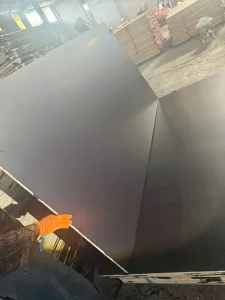
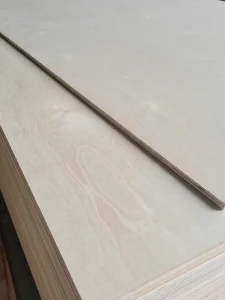
| Appearance | Light/Off-White | Dark Brown/Black |
| Primary Use | Furniture, Joinery | Formwork, Truck Floors |
MR Melamine: The Furniture Standard
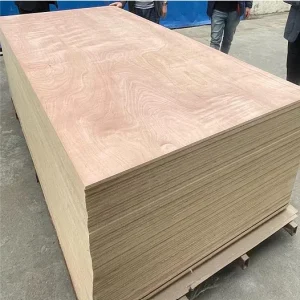
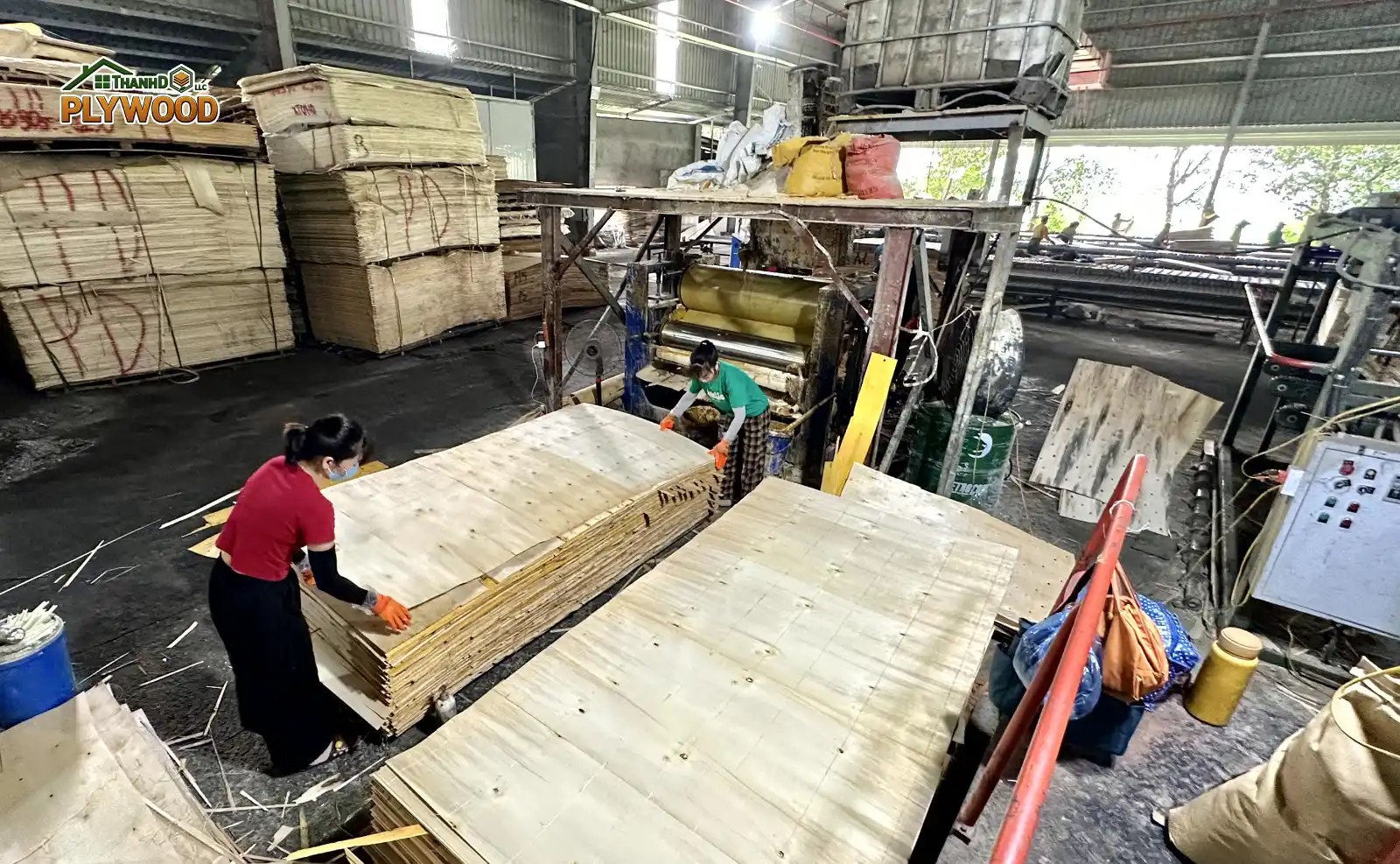
MR (Melamine-Urea-Formaldehyde) is the industry benchmark for indoor furniture. It provides an excellent balance of cost and performance for cabinetry and joinery. For high-end EU and US markets, Plywood ThanhdoLLC typically supplies MR-bonded panels with E0 certification.
WBP Phenolic: The Exterior Solution
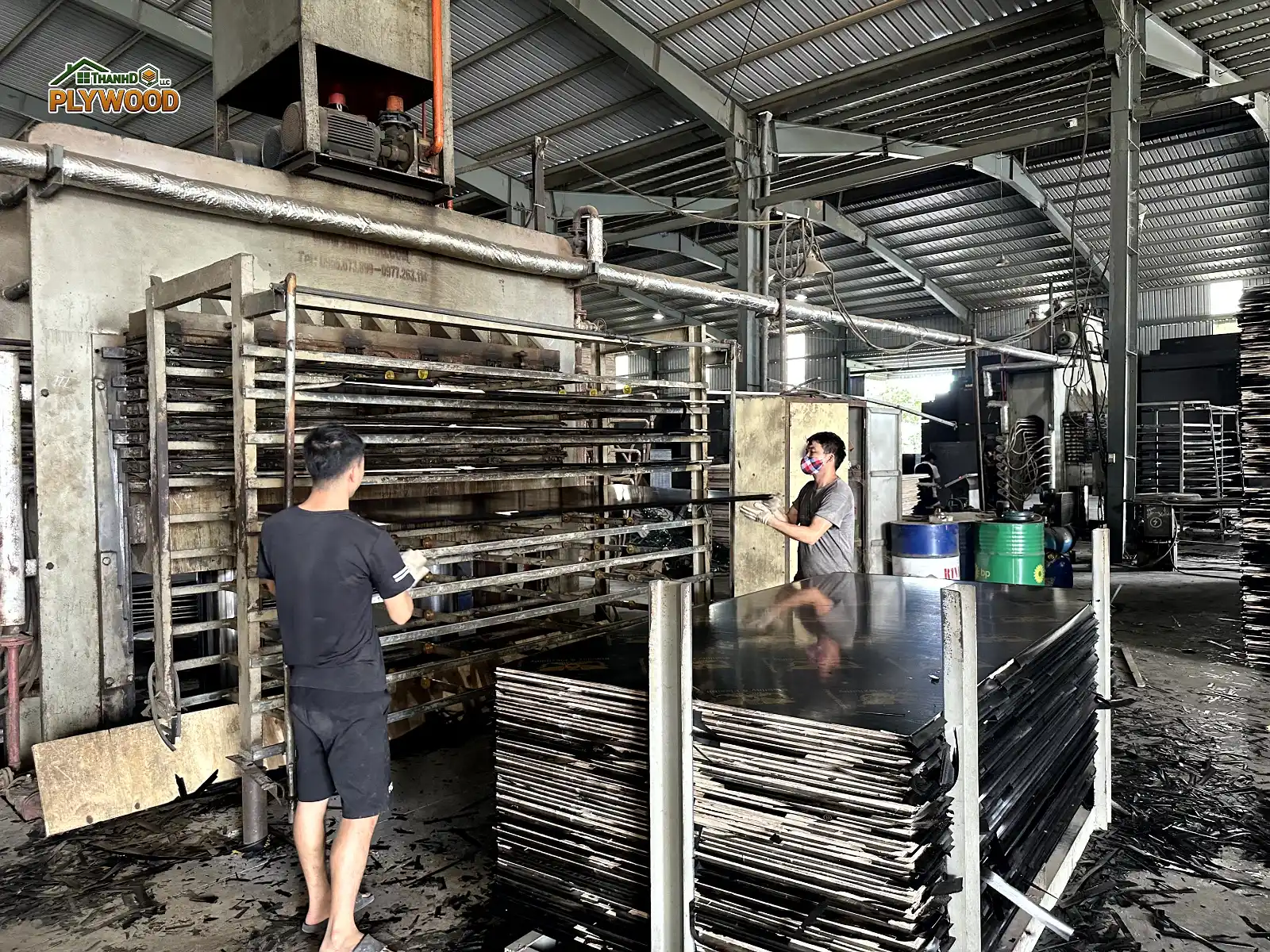
WBP resin creates a fully crosslinked, waterproof bond capable of surviving 72 hours of boiling. This is essential for:
-
Concrete Formwork: Repeated exposure to wet concrete and steam.
-
Marine & Transport: Truck flooring and scaffolding.
-
Exterior Cladding: Protection against direct weather elements.
Emission Standards: E0, E1, and E2
Formaldehyde emission limits are established to minimize health risks associated with VOCs.
Note on CARB P2: For the US market, CARB P2 (≤0.05 ppm) is the mandatory standard. It is generally equivalent to the European E0 grade and is required for all furniture and cabinet components sold in the US.
Global Compliance Requirements
When sourcing for international markets, always align your specs with the destination’s strictest regulations:
-
USA: CARB P2 / TSCA Title VI is mandatory for all composite wood products.
-
European Union: E1 is the legal minimum; however, the August 2026 REACH update effectively shifts the market toward E0/0.062 mg/m³.
-
Japan/Korea: JIS F★★★★ and SE0 standards are highly stringent, roughly aligning with E0 requirements.
-
India/Middle East: E1 is the standard for quality interiors, while E2 is strictly limited to non-structural packaging.
Strategic Tip: If distributing across multiple markets, specifying CARB P2 / E0 satisfies all EU and US regulatory requirements simultaneously.
Cost Considerations and Production Reality
Achieving lower emission levels or higher moisture resistance requires specialized manufacturing processes:
-
Resin Formulation: Low-formaldehyde resins often carry a 15–20% premium over standard E1 grades.
-
Process Control: E0 production requires longer press times and tighter temperature regulation, which limits factory throughput.
-
Third-Party Audits: CARB P2 compliance involves ongoing TPC (Third-Party Certifier) costs.
Plywood ThanhdoLLC operates segmented production lines to ensure cost-efficiency:
-
Segment A (Furniture): MR Melamine, E0/CARB P2 certified.
-
Segment B (Packaging/Commercial): MR Melamine, E1/E2.
-
Segment C (Industrial): Phenolic WBP, E0/E1.
Procurement Decision Tree
-
Water Resistance: Choose MR for interior/furniture; WBP for exterior/formwork.
-
Emission Limit: Choose CARB P2/E0 for US/EU furniture; E1 for general commercial use.
-
Documentation: Never accept an internal factory memo as proof of compliance. Request:
-
Third-party laboratory test reports.
-
Valid TPC certification (for US exports).
-
FSC chain-of-custody (if applicable).
-
By separating glue performance from emission compliance, you protect your supply chain from technical failure and legal liability. Plywood ThanhdoLLC offers full specification transparency, providing all necessary certification packages to ensure your cargo clears inspection without delay. Contact our export team to verify the right grade for your market.